Imprint & Privacy
Cast Spells on Product Discovery
CastSpells vs Productboard: When “Customer Feedback” Isn’t Enough
Productboard is one of the most recognized names in product management software, and for good reason. Their messaging is clear: understand customer needs, prioritize features, and rally everyone around the roadmap. If your biggest pain is scattered feedback and misaligned stakeholders, that value proposition is easy to say yes to.
The catch is that “customer feedback” is only one slice of evidence. In real product work, you also need market context, structured research, explicit hypotheses, and a reliable way to keep requirements connected to what you learned. That’s the gap CastSpells Product AI is designed to close, especially once your team is juggling multiple initiatives and the “why” starts getting contested.
Quick take
If you want a short answer, here it is. Productboard is strong when you want a customer-feedback-driven workflow that turns inputs into prioritization and roadmaps, with broad integrations into delivery and support tools. CastSpells Product AI is strong when you want discovery and validation artifacts to stay connected to PRDs and roadmaps, so decisions remain traceable as evidence changes.
Choose Productboard if you want to standardize on feedback intake, product insights, and stakeholder-facing roadmaps.
Choose CastSpells Product AI if you want an evidence-linked workflow from research → hypotheses → insights → PRDs → roadmap, with traceability as the default.
What Productboard emphasizes (based on their public positioning)
On their homepage, Productboard describes itself as product management software that helps PMs “understand customer needs, prioritize features & rally everyone around the roadmap,” and they lead with outcomes like “ship products that customers need faster.” They also highlight Spark , their AI for PMs, plus core workflows like turning feedback into actionable insights and aligning stakeholders around interactive roadmaps. If you already believe the main bottleneck is “collecting and synthesizing feedback,” Productboard is purpose-built for that job. This makes it a natural fit for teams that want a single place to turn inputs into roadmap communication.
Productboard also emphasizes integration depth. On their integrations page, they position Productboard as a platform that integrates with hundreds of systems and APIs to enhance data value and align teams. Even their pricing FAQ calls out integrations with tools like Jira, Azure DevOps, GitHub, Slack, Zendesk, and Intercom, which is a strong signal that they expect to sit at the center of a toolchain rather than replace it.
Sources used for this section are Productboard’s homepage, roadmaps page, integrations page, and pricing page. These links are included so you can verify the language and see the context. Any capabilities that depend on configuration, add-ons, or process should be confirmed in a demo.
What CastSpells Product AI is built to do
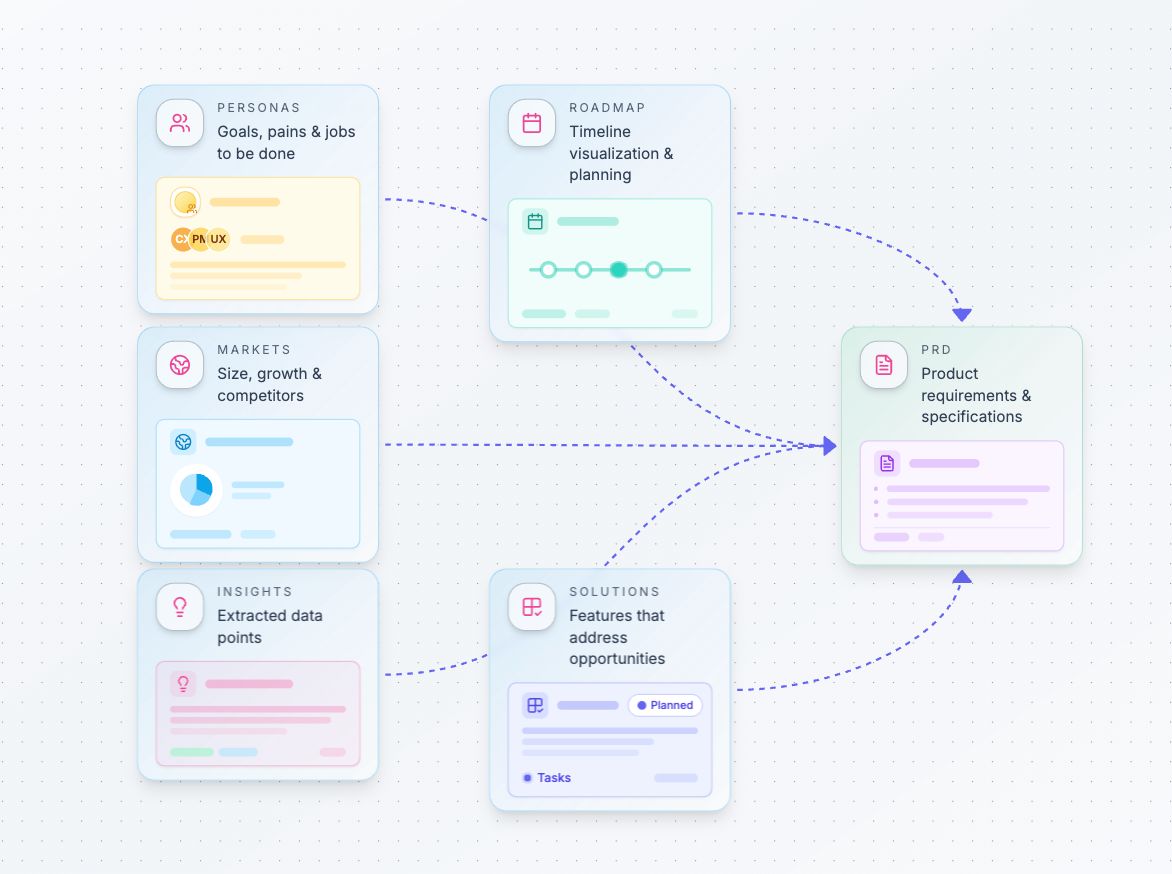
CastSpells Product AI is built around a different default. Instead of treating “feedback” as the primary unit of truth, it treats evidence as a system: market research, customer voice and personas, explicit hypotheses, structured interviews and trials, and validation data that becomes reusable insights. The platform is designed so that PRDs and roadmaps can embed that evidence directly, which keeps planning honest as your understanding evolves.
This approach is especially valuable when your team is debating tradeoffs, not just collecting requests. If someone asks “why is this requirement in the PRD?”, you can point to linked interviews, validation data, and the hypotheses that were validated. When something changes, you update the source of truth once and the connected planning docs stay in sync instead of drifting.
Pros and Cons
Here’s a pros/cons breakdown that reflects what each platform is optimized for. This is intentionally practical, because most teams don’t fail due to missing features. They fail because their tooling quietly pushes them toward habits that don’t match their reality.
CastSpells Product AI
Pros
Strong evidence-linked workflow from discovery to PRDs and roadmaps, which keeps context attached to decisions.
Built-in market research, personas/customer voice, hypotheses, interviews/trials, and validation data/insights that can be connected to planning.
PRDs can embed live research objects, which reduces drift when evidence changes and makes reviews less about archaeology.
“Spells” AI assistance is designed to work across the research and planning workflow, not just at the surface layer.
Great fit when the main risk is building the wrong thing because evidence gets lost across tools and documents.
Cons
If your org’s biggest requirement is deep workflow standardization across many teams, you may need to confirm fit against your exact process.
If you rely heavily on a large integrations catalog as the starting point for your workflow, you should confirm which integrations are critical for you.
Teams that want a lightweight, feedback-only workflow may find the evidence-first structure “more process” than they’re ready to adopt.
Productboard
Pros
Strong emphasis on feedback intake and turning customer input into product insights and stakeholder-facing roadmaps.
Broad integrations messaging (delivery and feedback tools), which can matter when Productboard needs to sit at the center of an existing stack.
Clear positioning around roadmaps and alignment, which is often the fastest path to stakeholder buy-in.
AI messaging (Spark) is designed for PM workflows, which can help teams move faster if it’s grounded in their real inputs.
Cons
Evidence beyond feedback (market context, structured research, hypotheses, validation traceability) may depend on process, conventions, or where your team stores “source of truth.”
If your team’s core pain is “we lose the why,” you’ll want to pressure-test how easily evidence stays attached to requirements during review and execution.
Tools optimized around intake and prioritization can still drift if requirements and research live in different places and get rewritten by hand.
Where CastSpells “wins” in practice
If your team already has lots of feedback, the real challenge usually isn’t “getting more.” The challenge is separating signal from noise, validating what’s actually true, and keeping the plan aligned with reality as you learn. That’s where CastSpells is intentionally stronger: it makes hypotheses explicit, encourages structured validation, and keeps PRDs and roadmaps connected to the evidence that earned them. You spend less time arguing about what someone “heard,” and more time deciding what to do next.
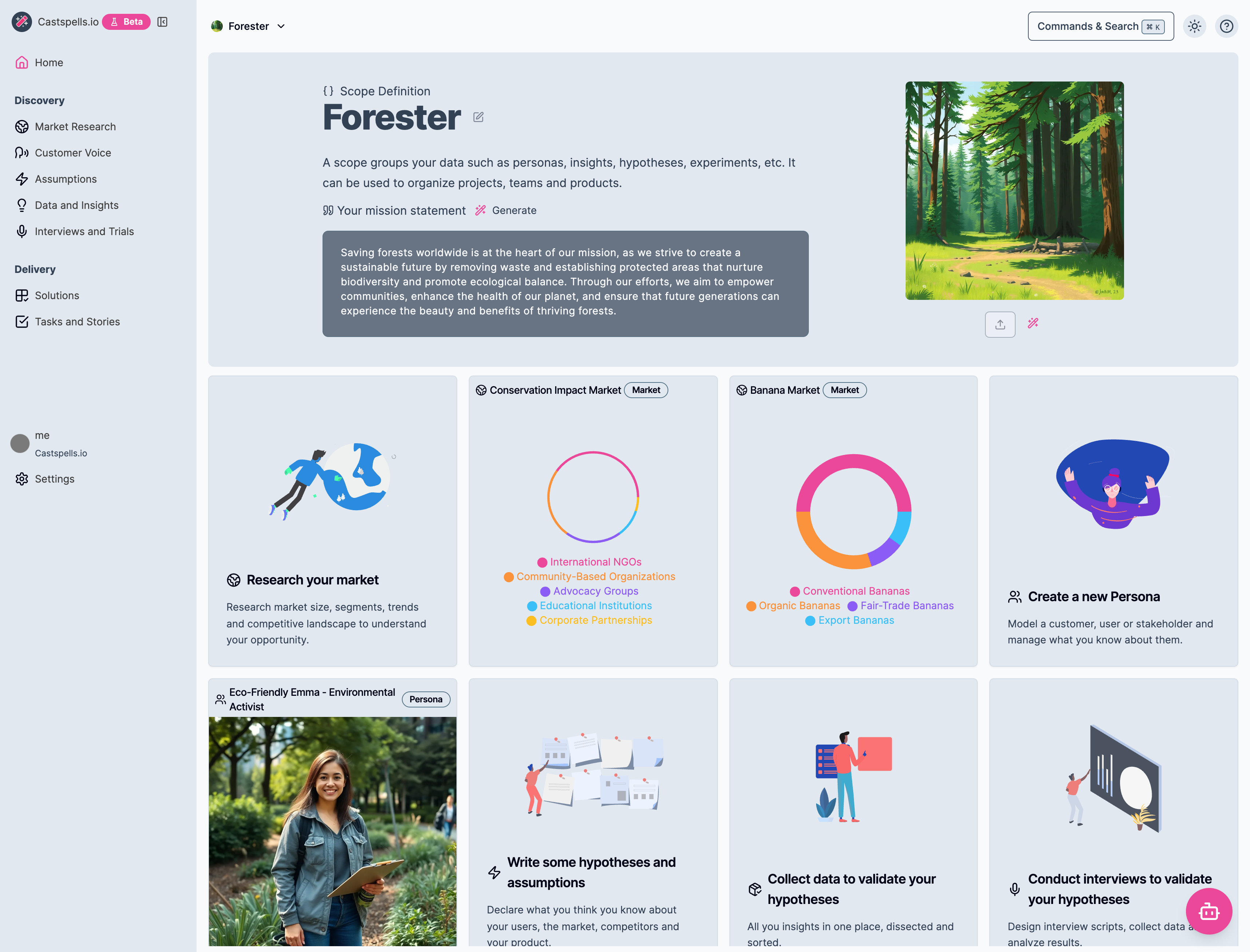
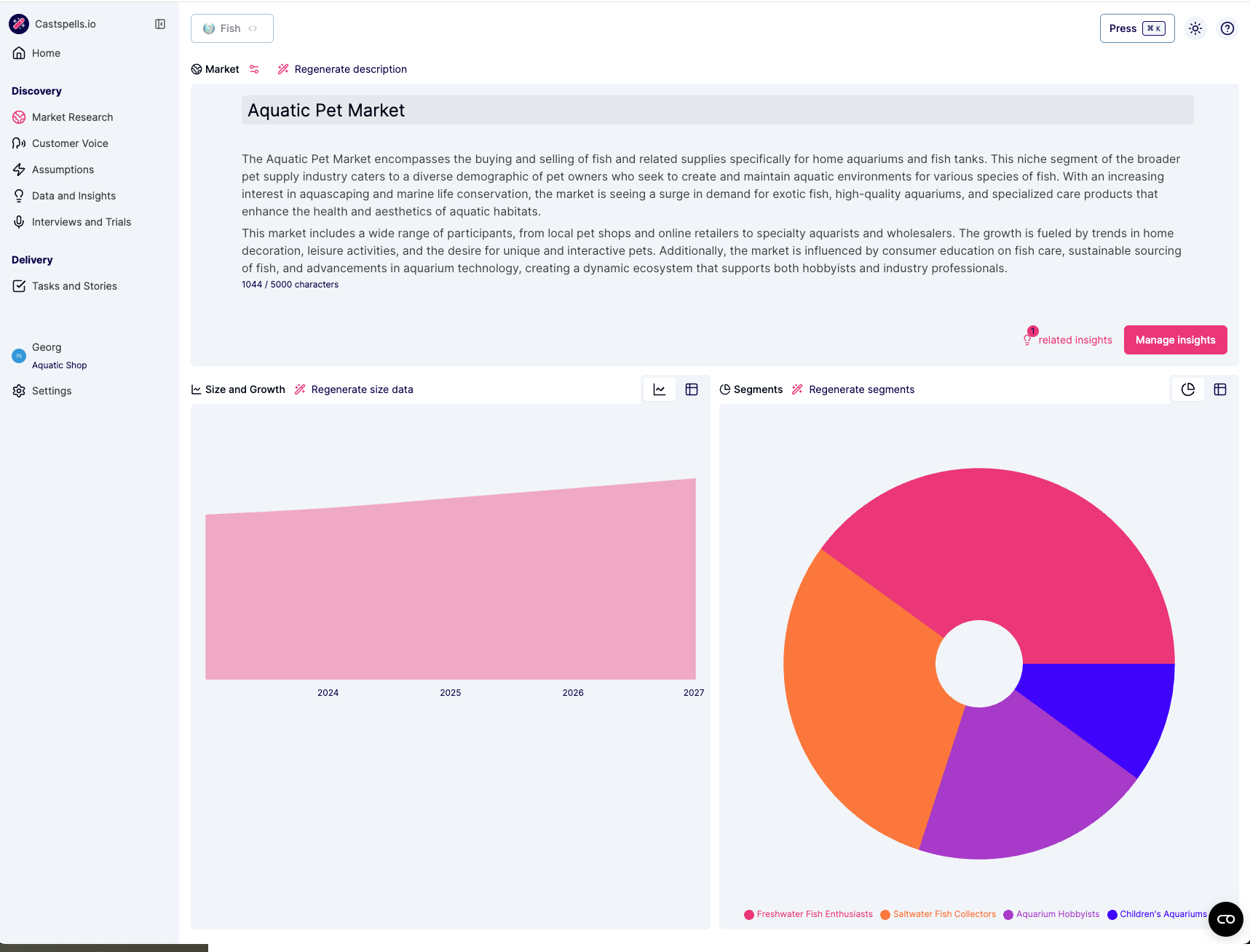
Here’s what that looks like when the artifacts and the plan live in the same system. The point of these views is not the UI; it’s the habit they encourage. When evidence is easy to find, the team debates tradeoffs instead of debating memories.
Interviews & Trials gives you a structured place to run discovery work and capture what you heard. It’s designed to link conversations back to assumptions and personas so changes are explainable. It also makes it easier to run consistent research across a team.
Data & Insights is where raw evidence becomes reusable learnings. You can attach links and files, generate summaries, and connect insights back to assumptions you’re trying to validate. This turns “we heard this in five calls” into a traceable artifact that survives staff changes.
PRDs can embed live objects from your workspace. That means markets, personas, hypotheses, and insights don’t have to be rewritten into a document to “count.” When the underlying evidence changes, your PRD stays honest without a rewrite sprint. This reduces drift and makes reviews less about reconstructing context.
Roadmaps connect the plan to work items that already have context. Instead of a timeline that floats above reality, the roadmap can reflect the same hypotheses, solutions, and tasks the team is working through. That keeps roadmap conversations focused on sequencing and dependencies, not arguments about the premise.
How to evaluate Productboard vs CastSpells in one hour
Pick one initiative that has messy evidence and at least one contentious decision. Then try to complete the same workflow in both tools without hand-waving or “we’ll track that somewhere else.” The goal is to see which platform reduces your coordination tax when the work gets real. If an evaluation step feels awkward, assume it gets worse under deadline pressure.
Use this checklist and keep the bar consistent across both evaluations. Try to do it with one PM, one designer or engineer, and one stakeholder who asks hard “why” questions. If the tool holds up under that pressure, it will hold up in your day-to-day.
Can you attach raw evidence (links, uploads, notes) to a decision and find it later?
Can you connect evidence to hypotheses, and track what got validated vs. invalidated?
Can you embed the “why” directly in the PRD next to requirements, without copy/paste?
Can stakeholders self-serve context without a meeting?
Can you explain prioritization without falling back to opinion and politics?
Ready to try CastSpells?
CastSpells Product AI helps teams keep evidence connected from discovery all the way to PRDs and roadmaps. It’s especially strong when the hardest part of product management is aligning decisions with reality as it changes. If that sounds like your problem, try it with one real initiative and one skeptical stakeholder.
Start Your Free Trial and feel what it’s like when the “why” stays attached to the plan. Use one real initiative and invite one skeptical stakeholder to the review, because that’s where traceability matters most. If it makes alignment faster and calmer, you’ll notice immediately.
Join the waitlist and adopt
ultimate product discovery
ultimate product discovery
Join the waitlist and adopt
ultimate product discovery
ultimate product discovery